
Why Real Estate Closings Get Delayed After the Contract Is Signed
Many real estate closing delays happen after the contract is signed. Learn the most common causes—including financing, inspections, appraisals, title issues, HOA requirements, and missed deadlines—and discover how to keep your transaction on track.
7/6/20263 min read
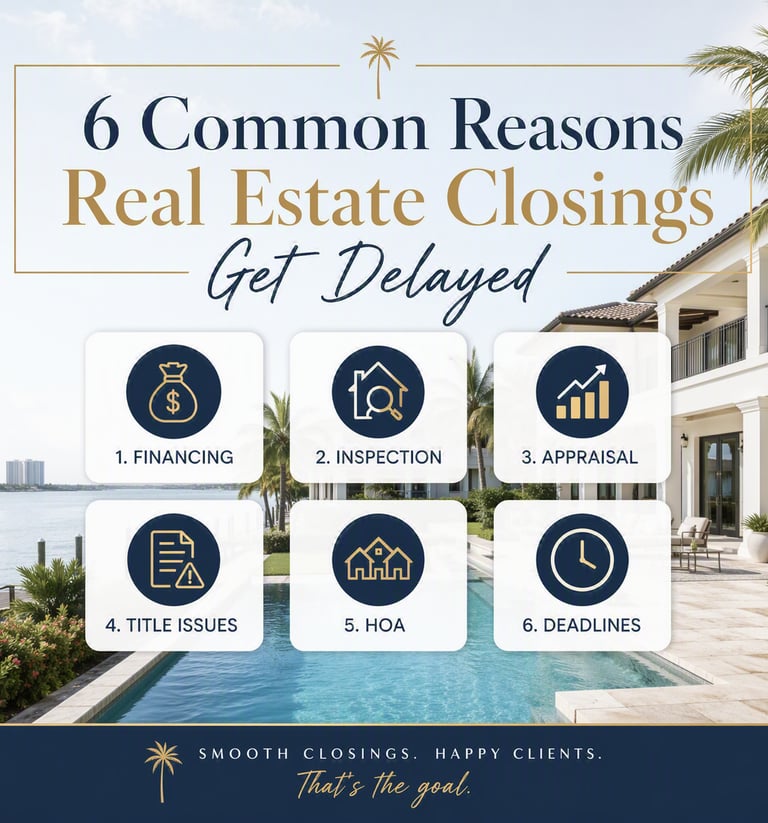
Why Real Estate Closings Get Delayed After the Contract Is Signed
Many buyers and sellers believe the hardest part of a real estate transaction is negotiating the purchase price. While price negotiations are important, many of the biggest challenges occur after the contract is signed.
According to recent industry data summarized by LegalClarity using the National Association of REALTORS® Confidence Index, approximately 14% of residential real estate transactions experience delays before closing, while about 5% fail to close altogether. Financing issues, inspections, appraisals, title concerns, HOA requirements, and missed contractual deadlines are among the most common reasons transactions are delayed or fail to reach the closing table.
Understanding what happens between contract acceptance and closing can help buyers, sellers, and real estate professionals avoid surprises and keep transactions moving forward.
Related Reading:
👉 Selling Your Home FSBO in Florida? What Happens After Accepting an Offer
What Happens After the Contract Is Signed?
An accepted contract is a major milestone, but it is only the beginning of the closing process.
Once a contract is executed, multiple parties must coordinate their efforts, including:
Buyers and sellers
Lenders
Title companies
Home inspectors
Appraisers
Insurance providers
Homeowners' associations
Real estate professionals
Transaction coordinators
Because so many people are involved, even a small delay in one area can affect the entire transaction timeline.
Related Reading:
👉 KeyCrew: How Transaction Coordinators Keep Florida Real Estate Deals on Track
Common Reasons Real Estate Closings Get Delayed
1. Financing Issues
Many buyers receive mortgage pre-approval before beginning their home search. However, final loan approval occurs during underwriting.
During this stage, lenders verify:
Employment
Income
Assets
Existing debts
Credit history
New debt, major purchases, employment changes, or missing documentation can delay approval and, in some cases, affect a buyer's financing eligibility.
2. Home Inspection Findings
A professional home inspection may uncover maintenance issues, safety concerns, or repairs that were not previously identified.
When significant issues are discovered, buyers and sellers often negotiate:
Repairs
Seller credits
Price adjustments
Contract amendments
These discussions can extend the closing timeline and, occasionally, result in a contract being terminated.
3. Appraisal Challenges
When financing is involved, lenders typically require an appraisal to verify the property's market value.
If the home appraises below the agreed purchase price, the parties may need to:
Renegotiate the purchase price
Increase the buyer's down payment
Challenge the appraisal
Explore alternative financing options
Resolving appraisal issues often adds additional time before closing.
4. Title Issues
A title search helps verify ownership and identify legal claims against the property.
Common title issues include:
Liens
Unpaid property taxes
Recording errors
Ownership disputes
Probate concerns
These issues generally must be resolved before ownership can legally transfer to the buyer.
5. HOA and Condominium Requirements
Many Florida communities have homeowner or condominium associations that require additional documentation before closing.
These requirements often include:
Estoppel certificates
Financial disclosures
Governing documents
Buyer approval requirements
Fee verification
If these documents are requested too late, they can significantly delay closing.
Related Reading:
👉 HOA Approval Delays in Florida: What Can Hold Up Your Closing?
👉 HOA Estoppel Fees in Florida: What Buyers, Sellers, and Agents Need to Know
👉 HOA Issues with Service Dogs in Florida Real Estate Closings
6. Missed Deadlines and Paperwork
Real estate contracts contain important deadlines involving:
Inspection periods
Financing contingencies
Earnest money deposits
HOA review periods
Closing documentation
Missing a deadline or failing to submit required paperwork on time can create unnecessary complications and put the transaction at risk.
Why Transaction Coordination Matters
Negotiating an offer is only one part of a successful real estate transaction.
From contract to closing, every step requires organization, communication, and attention to detail.
A transaction coordinator helps by:
Tracking contract deadlines
Coordinating inspections and appraisals
Monitoring financing progress
Following up with title companies and lenders
Managing documentation
Communicating with all parties involved
Helping keep the transaction on schedule
Proper transaction coordination helps reduce stress, improve communication, and minimize avoidable delays throughout the closing process.
Related Reading:
👉 KeyCrew: How Transaction Coordinators Keep Florida Real Estate Deals on Track
👉 Documents That Commonly Delay Florida Real Estate Closings
The Bottom Line
The purchase price often receives the most attention, but many of the biggest challenges happen after the contract is signed.
Financing issues, inspections, appraisals, title concerns, HOA requirements, and missed deadlines can all affect the closing timeline. Understanding these potential obstacles—and working with experienced real estate professionals—can help keep transactions moving smoothly from contract to closing.
Whether you're buying, selling, or managing a transaction in Palm Beach County, Boca Raton, Delray Beach, or anywhere in South Florida, staying organized and proactively managing each step of the process can make the difference between a smooth closing and an unexpected delay.
Need Help Keeping Your Closing on Track?
Managing deadlines, documents, inspections, financing milestones, and communication between multiple parties can quickly become overwhelming.
KeyCrew provides professional Florida transaction coordination services that help Realtors®, buyers, sellers, and FSBO clients keep transactions organized, compliant, and moving toward a successful closing.
Learn More
Star Closers
Florida Transaction Coordinator
Contract-to-Close Transaction Coordination Services for Florida Real Estate
📧 info@thestarclosers.com
📞 561-235-0822
Serving real estate professionals across Florida including Miami, Orlando, Tampa, Fort Lauderdale, West Palm Beach, Jacksonville, Naples, and Gainesville.
Verified Real Estate Transaction Support Professional
Key Crew Verified Expert
Star Closers provides administrative contract-to-close transaction coordination services for Florida real estate transactions. We do not perform licensed real estate activities. Fees may be paid at closing with brokerage approval.
© 2025 Star Closers. All Rights Reserved.


Need help or an accommodation?
Contact us or message us via WhatsApp.